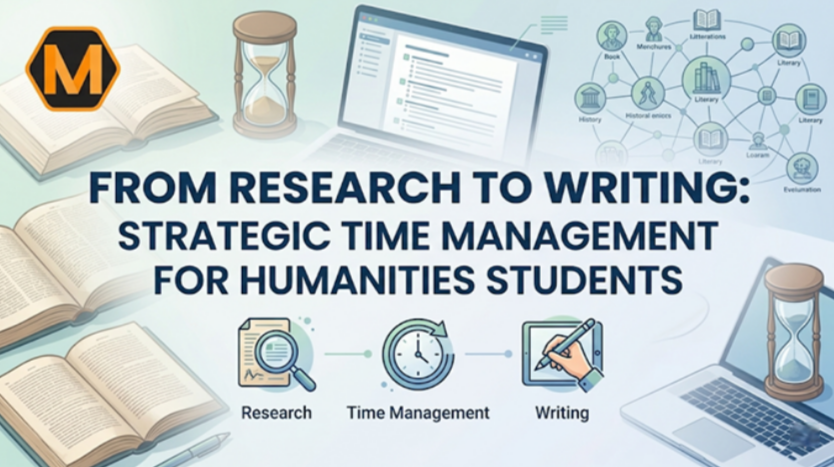
The transition from a broad research phase to a polished final draft is often where undergraduate students feel the most pressure. In the humanities—disciplines like History, Philosophy, Literature, and Sociology—the challenge isn’t just finding information; it’s synthesizing diverse viewpoints into a coherent, original argument. Unlike STEM subjects, where data might lead to a singular conclusion, humanities subjects require a deep dive into “gray areas.” Managing your time effectively across these stages is the difference between a rushed, superficial paper and a high-distinction submission.
Effective academic planning begins with understanding that writing is a recursive process. You don’t simply “do the research” and then “do the writing.” Instead, you read, draft a few notes, realize you need more context, and go back to the library. To handle this without burning out, many successful students seek professional essay writing help to understand how to structure these complex transitions. By observing how professional academic models organize arguments, you can better visualize your own roadmap from the initial library search to the final bibliography.
The Three-Phase Productivity Model
To avoid the “week-before panic,” break your assignment timeline into three distinct blocks. This prevents the cognitive overload that happens when you try to read and write simultaneously.
| Phase | Focus Activity | Suggested Time % |
| Phase 1: Discovery | Mapping keywords, primary source analysis, and bibliography building. | 40% |
| Phase 2: Synthesis | Drafting the thesis and building the “Skeleton” of the essay. | 30% |
| Phase 3: Refinement | Polishing prose, checking citations, and ensuring logical flow. | 30% |
Phase 1: Strategic Discovery and Source Mapping
The biggest time-sink for undergraduates is “passive reading.” This is when you spend hours reading journals without taking organized notes, only to realize later you can’t remember which author made which point.
Instead, use a Synthesis Matrix. This is a simple table where the rows are your sources and the columns are the themes of your essay. As you read, fill in the cells. When it comes time to write, you won’t be looking at five different books; you’ll be looking at one sheet of paper that tells you exactly how Author A and Author B disagree on a specific point. This method is particularly vital when dealing with historical analysis, where interpretations vary wildly across different eras.
Phase 2: Mastering the Middle—The Argumentative Core
Once your matrix is full, you reach the most difficult part of the process: the transition to a specialized draft. In subjects like history, the sheer volume of primary documents can be overwhelming. If you find yourself stuck at the midpoint of your project, utilizing specialized history essay help from the experts at MyAssignmentHelp provides the necessary clarity. This type of high-level guidance helps you identify which historical evidence is “load-bearing” for your specific thesis and which is merely “background noise.” Having a professional perspective at this stage ensures that your middle paragraphs don’t just list facts, but actually build a persuasive case.
The “Pomodoro” for Humanities: The 50/10 Rule
While the standard Pomodoro technique suggests 25-minute bursts, humanities students often find this too short. Deep analytical thinking takes about 15 minutes just to “enter the zone.”
- 50 Minutes of Focused Work: No phone, no tabs other than your research.
- 10 Minutes of Total Rest: Step away from the screen. Walk, stretch, or grab water.
- The Result: Two of these cycles are more productive than four hours of “distracted” sitting.
Phase 3: The Refinement Loop
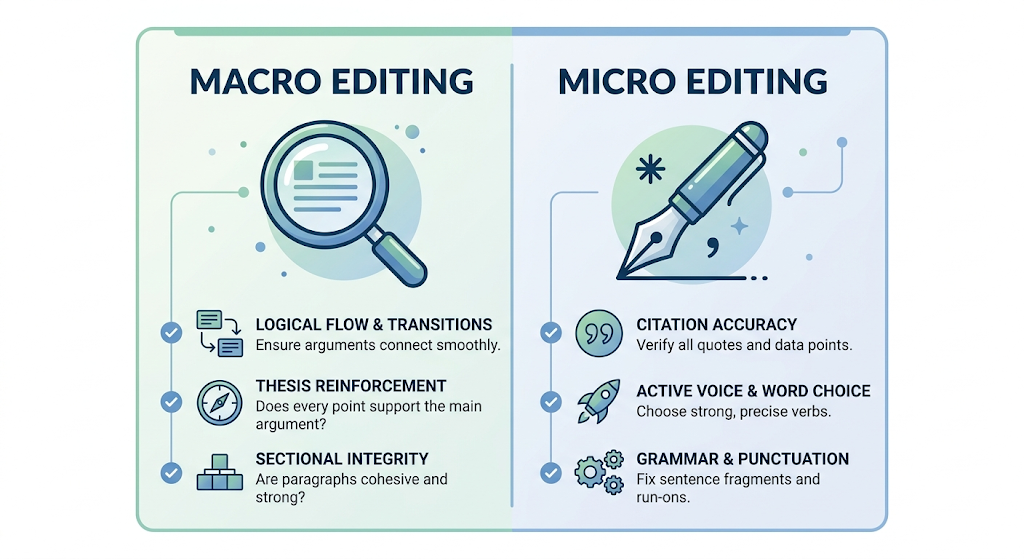
The final 30% of your time should be dedicated to “Macro” and “Micro” editing.
- Macro Editing: Read your essay’s first and last sentences of every paragraph. Do they tell a story? Does the logic flow from A to B? If you skip the middle of the paragraphs, can you still follow the argument?
- Micro Editing: This is where you look for “AI-sounding” fluff or repetitive sentence starters. Human writing has “burstiness”—some sentences are short and punchy, others are long and descriptive. If your essay feels too robotic, break up your long sentences.
Navigating Digital Distractions
In a world of instant notifications, the humanities student’s greatest enemy is the “Quick Check” of social media. Research shows that it takes an average of 23 minutes to regain full focus after a single interruption. Use site blockers during your Phase 1 and Phase 2 sessions. Treat your research time like a professional appointment that cannot be moved or interrupted.
Summary of Best Practices
- Start Early, but Start Small: Spend the first day just finding five keywords. Small wins build momentum.
- Talk it Out: If you can’t explain your essay topic to a friend in two minutes, your thesis is likely too complex. Simplify it before you start writing.
- Cite as You Go: Never leave citations for the end. It is the fastest way to accidentally commit plagiarism or lose hours of time looking for a “lost” page number.
Frequently Asked Questions (FAQ)
Q1: How do I know if I have enough research?
Ans: A good rule of thumb is the “Saturation Point.” If you start seeing the same names and arguments repeated in every new article you find, you likely have enough evidence to begin your synthesis.
Q2: Is it okay to change my thesis halfway through?
Ans: Yes. In fact, it’s often a sign of good scholarship. As you engage with more sources, your understanding deepens. Just ensure you update your “Phase 2” outline to reflect the new direction.
Q3: How can I make my writing sound more “human” and less academic?
Ans: Avoid “Nominalization”—which is the habit of turning verbs into heavy nouns (e.g., using “The realization of the fact” instead of “I realized”). Use active verbs and vary your sentence length to keep the reader engaged.
Q4: How do I manage time if I have three essays due in the same week?
Ans: Use the “Staggered Method.” Spend your mornings on the hardest essay (the one that requires the most brainpower) and your evenings on the “easier” tasks like formatting bibliographies or checking citations for the other two.
Q5: Can professional services really help with my grade?
Ans: Services that provide model papers or structural guidance help you see what a “First Class” paper looks like. They serve as a roadmap for your own original writing, helping you understand the tone and formatting expected by university professors.
About The Author
Hi, I’m Ruby Walker, a seasoned academic strategist and senior content specialist at MyAssignmentHelp. With a background in Humanities and years of experience in the digital education space, I focus on helping students bridge the gap between complex research and high-quality writing.